
ALUVIA PERSPECTIVE · KIGALI SANITATION
From sanitation ambition to local treatment: making decentralisation operational.
Kigali does not need to choose between long-term city infrastructure and immediate local action. Properly assessed, commissioned and maintained wastewater systems at buildings, premises and neighbourhood scale can reduce nuisance now while supporting a wider sanitation strategy.
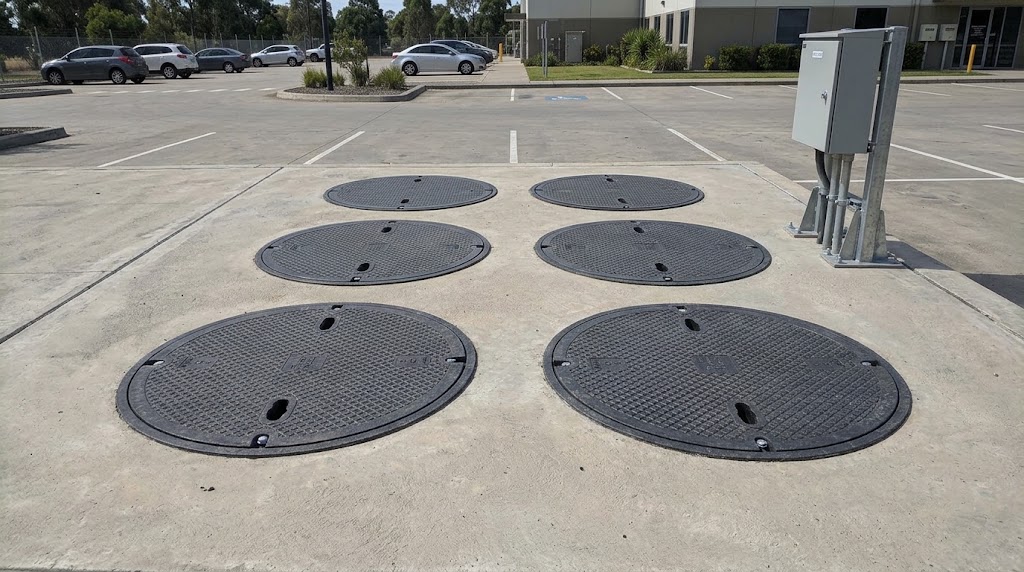
The important idea: treatment can happen closer to where wastewater is produced
For a practical selection framework, read our wastewater treatment system Rwanda guide, covering DEWAT systems, septic-tank alternatives, odor control and maintenance.
An opinion article published by The New Times, “Kigali’s sanitation future lies in cell-level decentralisation”, argues that the city should consider phased, decentralised wastewater infrastructure shaped by population, sanitation needs, topography and available financing.
ALUVIA agrees with the practical core of that argument: sanitation progress should not depend only on one distant, all-encompassing project. Buildings, commercial premises, institutions, hospitality sites and local clusters can be assessed individually and equipped with treatment suited to their real flow, pollution load, available space and permitted outlet.
Decentralised does not mean uncoordinated
A local system succeeds only when five responsibilities remain connected:
- Assessment: establish actual users, peak flow, COD/BOD loading, upstream pretreatment and the receiving environment.
- Selection: choose a standard modular capacity or a project-specific parallel arrangement.
- Verification: commission under representative conditions and use laboratory results to verify the agreed treatment objective.
- Maintenance: protect the biological process through mandatory reseeding, inspection and corrective support.
- Records: retain operating, maintenance, sampling and corrective-action evidence.
ECOFLOW provides standard 50, 100 and 250 PE building-scale treatment sets. Projects requiring 500 PE or more are assessed and configured as adequate project-specific solutions. Existing concrete installations can be upgraded after a free initial on-site assessment.
How a modular treatment pathway supports phased sanitation
A phased city approach works best when each phase uses repeatable technical principles. ALUVIA combines controlled inlet management, decantation, MBBR biological treatment supported by ALUVIAMEDIA, active biological filtration, UV finishing and smart operational monitoring. The configuration can be integrated into an existing concrete setup, installed in PE at the surface or below ground, or supplied in a containerized format from 100 PE.
Where verified outlet quality and the competent authority permit, treated water may be considered for non-potable washing, cleaning or garden irrigation. Reuse is never assumed from appearance alone; the project objective, safeguards and laboratory evidence determine the allowed route.
What decision-makers should ask before approving a local system
- Who is accountable for design confirmation, commissioning and ongoing operation?
- What are the peak hydraulic and organic loads?
- Where will treated water discharge or be reused?
- Which standard, permit and laboratory verification plan apply?
- Is maintenance funded and mandatory for the life of the system?
- Can performance data and service records be consolidated for area-level oversight?
Turning the discussion into implementation
Decentralised sanitation is credible when local treatment is treated as infrastructure—not as a tank that is installed and forgotten. A successful model combines standardisation with site assessment, private execution with public requirements, and fast installation with long-term operational responsibility.
ALUVIA is ready to support building owners, developers, architects, institutions and public-private initiatives that want to convert Kigali’s sanitation ambition into phased, measurable wastewater improvement.
Assess a building, premises or local cluster
For an existing installation, ALUVIA offers a free initial on-site assessment. For new projects, configure ECOFLOW or contact our team for a project-specific solution.
Configure a solutionContact ALUVIA