One of the biggest concerns for property owners, hotels, hospitals, schools, and residential developments is not the wastewater treatment process itself—it’s the smell.
A poorly designed wastewater treatment system can generate unpleasant odors that lead to complaints, damage a property’s reputation, and even reduce its value. The good news is that odor is not inevitable. In most cases, it is the result of poor design, inadequate maintenance, or incorrect operation.
What Causes Bad Odors?
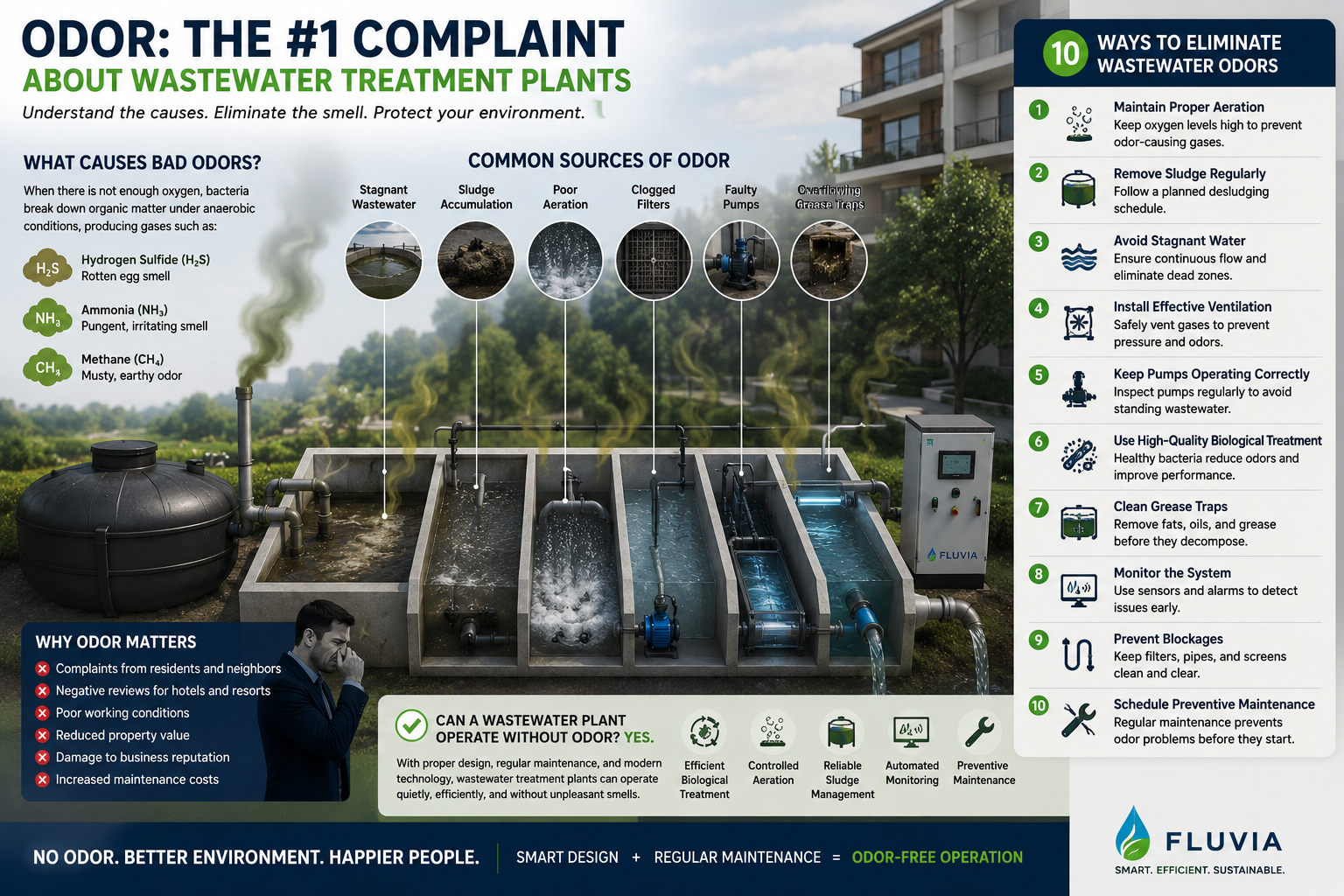
Wastewater naturally contains organic matter. When there is not enough oxygen, bacteria begin breaking down this material under anaerobic conditions.
This process produces gases such as:
- Hydrogen sulfide (H₂S)
- Ammonia (NH₃)
- Methane (CH₄)
Hydrogen sulfide is responsible for the characteristic “rotten egg” smell commonly associated with septic tanks and poorly maintained treatment plants.
Common Sources of Odor
Bad odors usually originate from:
- Septic tanks without proper ventilation
- Stagnant wastewater
- Sludge accumulation
- Poor aeration
- Clogged filters
- Faulty pumps
- Dead zones inside treatment tanks
- Overflowing grease traps
Identifying the source is the first step toward solving the problem.
Why Odor Matters
Persistent odors can have serious consequences:
- Complaints from residents and neighbors
- Negative reviews for hotels and resorts
- Poor working conditions
- Reduced property value
- Damage to business reputation
- Increased maintenance costs
For commercial facilities, odor control is part of providing a high-quality environment.
10 Ways to Eliminate Wastewater Odors
1. Maintain Proper Aeration
Aerobic bacteria produce far fewer odor-causing gases than anaerobic bacteria.
Efficient aeration keeps oxygen levels high and reduces hydrogen sulfide formation.
2. Remove Sludge Regularly
Excess sludge decomposes and becomes a major source of odor.
Follow a planned desludging schedule based on system loading and manufacturer recommendations.
3. Avoid Stagnant Water
Dead zones encourage anaerobic conditions.
Good hydraulic design ensures wastewater continues to move through the treatment process.
4. Install Effective Ventilation
Proper venting safely releases gases and prevents pressure buildup inside tanks.
Ventilation systems should be designed to minimize nuisance odors around occupied areas.
5. Keep Pumps Operating Correctly
Pump failures can leave wastewater standing for extended periods.
Routine inspections help prevent odor caused by stagnant wastewater.
6. Use High-Quality Biological Treatment
Healthy microbial populations break down organic matter efficiently while minimizing odor production.
Stable biological processes improve both treatment performance and user comfort.
7. Clean Grease Traps
Grease traps should be inspected and cleaned regularly.
Accumulated fats, oils, and grease decompose quickly and create strong odors.
8. Monitor the System
Modern monitoring systems can detect abnormal conditions before odors become noticeable.
Important parameters include:
- Dissolved oxygen
- Flow rate
- Pump operation
- Tank levels
- Alarm status
9. Prevent Blockages
Blocked pipes and filters slow wastewater flow and increase retention time.
Routine inspection helps maintain smooth system operation.
10. Schedule Preventive Maintenance
Regular maintenance keeps all components operating efficiently and helps identify issues before they become major odor problems.
Can a Wastewater Treatment Plant Operate Without Odor?
Yes.
A properly designed, correctly sized, and well-maintained wastewater treatment plant should operate with little to no noticeable odor during normal conditions.
Modern compact treatment systems combine:
- Efficient biological treatment
- Controlled aeration
- Reliable sludge management
- Automated monitoring
- Preventive maintenance
Together, these measures significantly reduce the likelihood of odor problems.
Conclusion
Odor should never be accepted as a normal part of wastewater treatment.
With proper engineering, regular maintenance, and modern treatment technology, wastewater treatment plants can operate quietly, efficiently, and without creating unpleasant smells for nearby occupants.