Operating a wastewater treatment plant is not just about meeting discharge standards. The real challenge is maintaining reliable performance while controlling electricity, maintenance, sludge handling, and labor costs. A well-designed system can reduce operating expenses significantly over its lifetime.
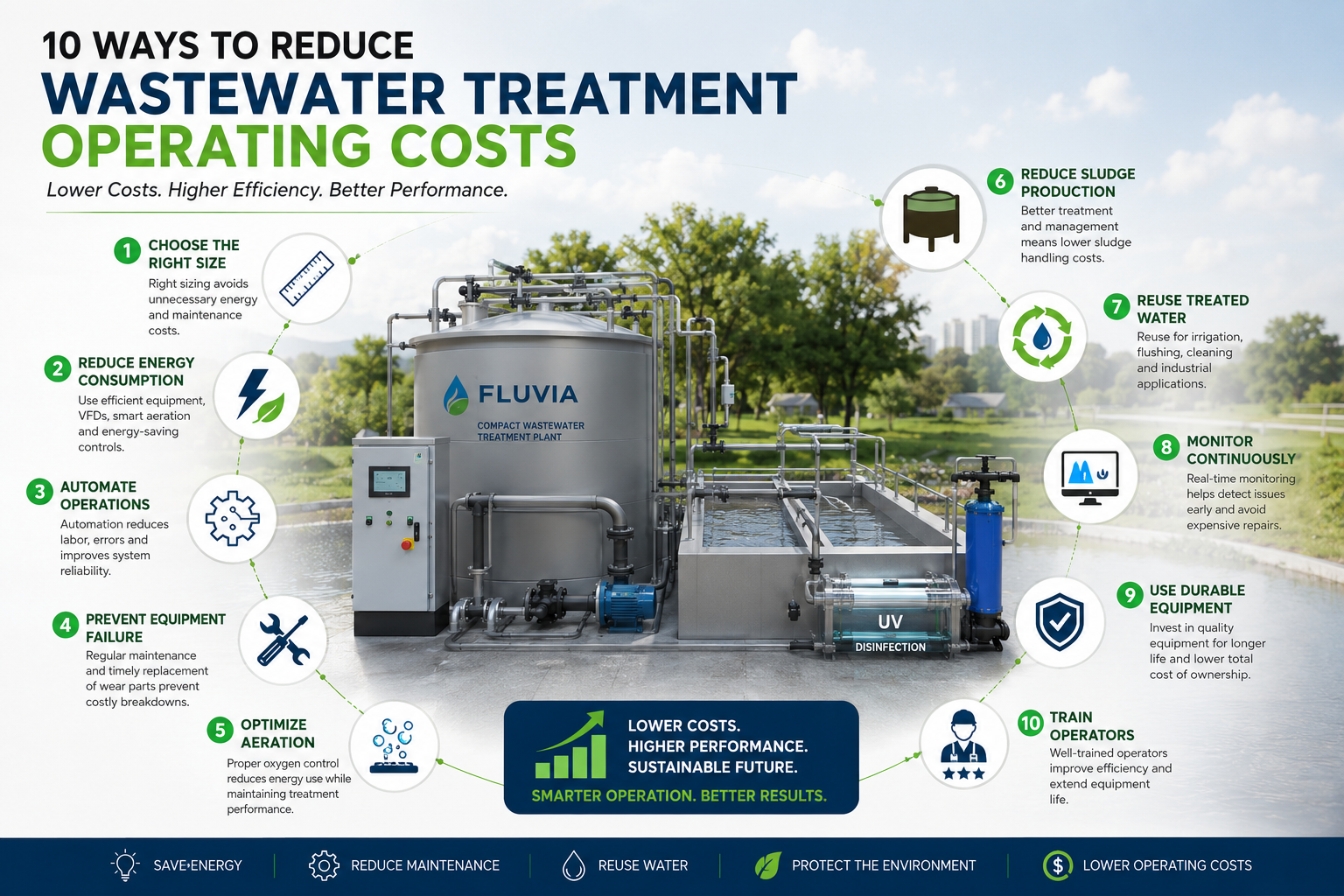
1. Choose the Right Plant Size
Oversized plants consume unnecessary power and chemicals, while undersized systems struggle to meet treatment standards.
Always design based on:
- Current population equivalent (PE)
- Daily wastewater flow
- Peak flow
- Future expansion (20–30%)
2. Reduce Energy Consumption
Electricity is often the largest operating expense.
Ways to reduce consumption:
- High-efficiency blowers
- Variable Frequency Drives (VFDs)
- Smart aeration control
- Energy-efficient pumps
- Automatic standby mode during low flow
Lower energy use means lower monthly operating costs.
3. Automate Routine Operations
Modern automation eliminates unnecessary manual intervention.
Examples include:
- Automatic pump sequencing
- Level sensors
- Overflow alarms
- Remote monitoring
- Automatic backwashing of filters
Automation also reduces operator errors.
4. Prevent Equipment Failure
Preventive maintenance costs far less than emergency repairs.
Create a maintenance schedule for:
- Pumps
- Blowers
- Treatment systems
- Electrical panels
- Valves
- Sensors
Replacing inexpensive wear parts on time can avoid major breakdowns.
5. Optimize Aeration
Aeration often accounts for 40–60% of total energy consumption in biological treatment systems.
Optimisation methods:
- Dissolved oxygen sensors
- Timed aeration cycles
- Fine bubble diffusers
- High-efficiency blowers
Proper oxygen control improves treatment while reducing electricity use.
6. Reduce Sludge Production
Sludge disposal is expensive.
Effective methods include:
- Improved biological treatment
- Regular desludging
- Efficient settling tanks
- Proper bacterial balance
Lower sludge volumes reduce transportation and disposal costs.
7. Reuse Treated Water
Instead of discharging treated water, reuse it for:
- Landscape irrigation
- Toilet flushing
- Car washing
- Industrial cleaning
- Cooling systems
Water reuse lowers freshwater consumption and utility bills.
8. Monitor Performance Continuously
Early detection prevents costly failures.
Monitor:
- Flow rate
- pH
- Dissolved oxygen
- Turbidity
- Pump status
- Power consumption
Remote monitoring allows operators to respond quickly before problems escalate.
9. Use Durable Equipment
Low-cost equipment may require frequent replacement.
Invest in:
- Corrosion-resistant materials
- Reliable pumps
- Industrial-grade blowers
- Quality control panels
- UV systems with long lamp life
The total lifecycle cost is often lower than repeatedly replacing cheaper components.
10. Train Operators
Even the best treatment plant performs poorly without proper operation.
Training should cover:
- Daily inspections
- Basic troubleshooting
- Preventive maintenance
- Emergency procedures
- Safety practices
Knowledgeable operators improve reliability and extend equipment life.
Common Costly Mistakes
Many facilities increase operating costs by:
- Oversizing equipment
- Ignoring preventive maintenance
- Allowing excessive sludge accumulation
- Running blowers continuously
- Delaying equipment replacement
- Failing to monitor system performance
Avoiding these mistakes can significantly reduce long-term expenses.
Conclusion
The lowest-cost wastewater treatment plant is not the one with the lowest purchase price; it is the one with the lowest total cost of ownership over its entire service life.
A properly engineered system that combines efficient equipment, automation, preventive maintenance, and water reuse can deliver reliable treatment while minimising operational costs.